The History of Berlevåg
At the beginning of the 1900s, one could quite literally walk straight across the harbour by jumping from one boat to the next. The fishing industry was, and still is, the most important livelihood in Berlevåg, which is why it was vital to build a proper harbour able to withstand the strong waves of the Barents Sea. Construction of the first breakwaters began in 1913, but it would take almost a century to complete the harbour development.
Heavy stone blocks proved insufficient to hold back the sea, which easily destroyed them. Concrete tetrapods became the solution. More than 11,000 interlinked tetrapods were carefully installed to protect the fishing village from the dangerous sea. The tetrapod has a four-legged shape that helps to disperse wave energy.
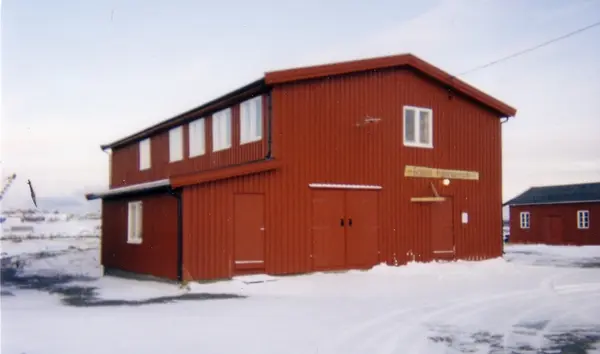
The tetrapod has become a symbol of Berlevåg, and the local museum preserves and presents, among other things, the fascinating history of the harbour construction and North Norwegian fisheries. Berlevåg Harbour Museum is housed in the former headquarters used by the Norwegian Harbour Authority (now the Norwegian Coastal Administration) for its workers after 1945.
The museum is located on the eastern side of Berlevåg’s inner harbour, by the Varnes Breakwater. Here, visitors can explore the history of coastal culture and fisheries, the Second World War and the occupation, the Pomor trade, and the Sea Sami population. The museum holds a wide range of objects from the fishing industry, coastal navigation markers, boats, wartime artefacts, and much more. We also have a large photo archive with images from Berlevåg municipality through the years.